


#Python TQC考題806 字元次數計算
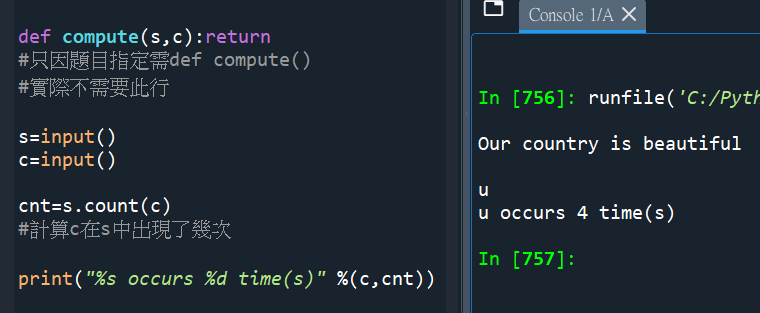
def compute(s,c):return
#只因題目指定需def compute()
#實際不需要此行
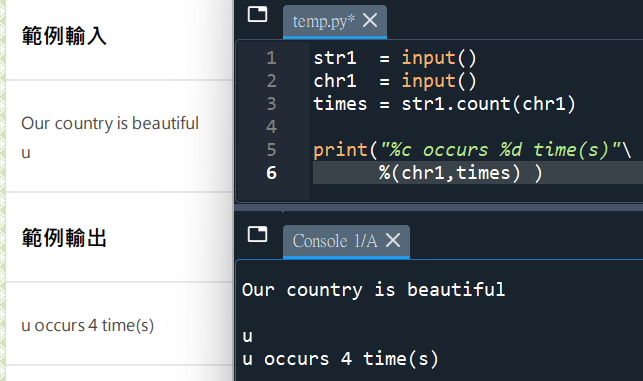
s=input()
c=input()
cnt=s.count(c)
#計算c在s中出現了幾次
print(“%s occurs %d time(s)” %(c,cnt))
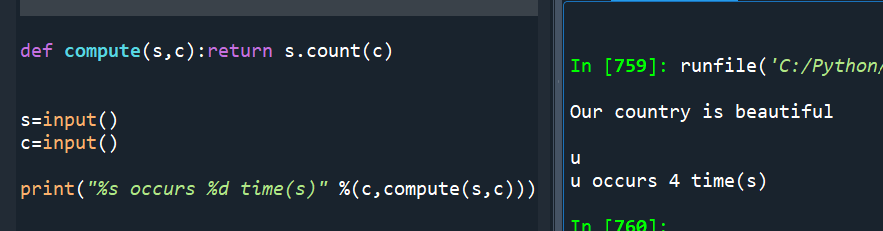
#題目希望的寫法:
def compute(s,c):return s.count(c)
s=input()
c=input()
print(“%s occurs %d time(s)” %(c,compute(s,c)))
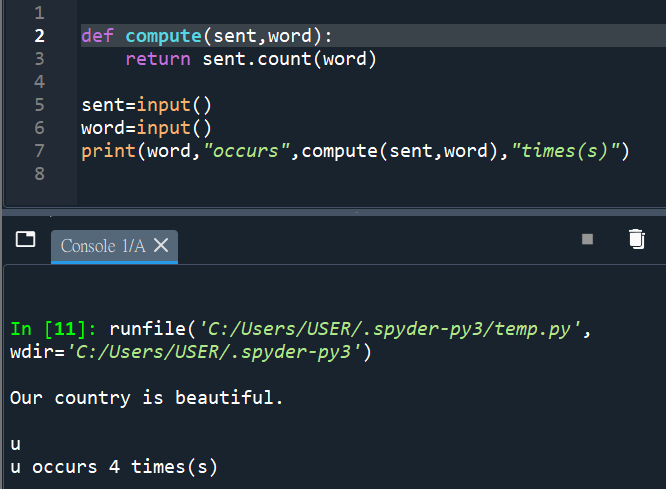
def compute(sent,word):
return sent.count(word)
sent=input()
word=input()
print(word,”occurs”,str(compute(sent,word)),”times(s)”)
#字串間用逗點分隔,自動生出空白
#用+連接,沒有空白
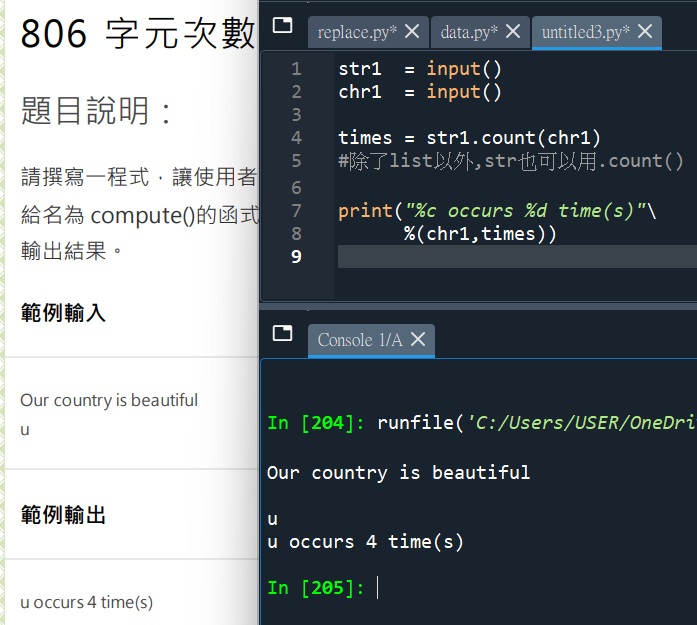
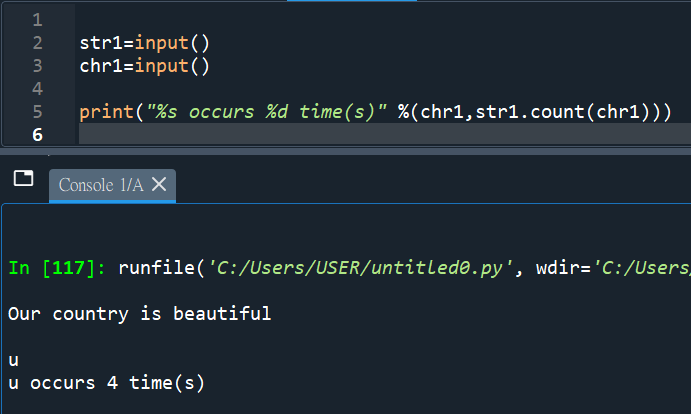
#string就可以.count()了
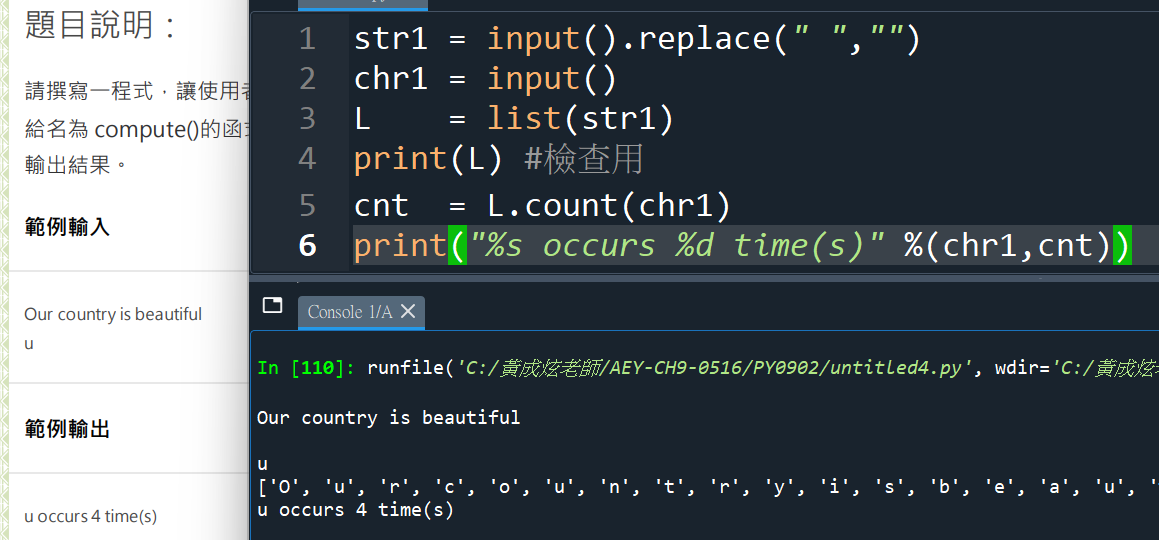
#不用轉成list,多此一舉了!

![Python:如何將folder_path & file_name合併為file_path? fpath = os.path.join (folder , fname) #不需要[ ]包覆folder,fname; fpath1 = “\\”.join( [folder , fname] ) #需要[ ] 包覆folder,fname ; 反過來講,file_path如何拆分為folder_path & file_name? os.path.dirname() ; os.path.basename() ; file_name如何拆分為主檔名與副檔名os.path.splitext() #split(分裂) ext](https://i1.wp.com/savingking.com.tw/wp-content/uploads/2023/07/20230717184401_87.png?quality=90&zoom=2&ssl=1&resize=350%2C233 "Python:如何將folder_path & file_name合併為file_path? fpath = os.path.join (folder , fname) #不需要[ ]包覆folder,fname; fpath1 = “\\”.join( [folder , fname] ) #需要[ ] 包覆folder,fname ; 反過來講,file_path如何拆分為folder_path & file_name? os.path.dirname() ; os.path.basename() ; file_name如何拆分為主檔名與副檔名os.path.splitext() #split(分裂) ext")



近期留言