


#Python TQC考題806 字元次數計算
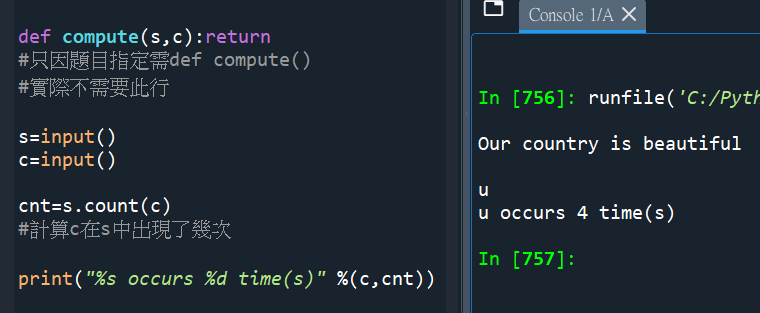
def compute(s,c):return
#只因題目指定需def compute()
#實際不需要此行
s=input()
c=input()
cnt=s.count(c)
#計算c在s中出現了幾次
print(“%s occurs %d time(s)” %(c,cnt))
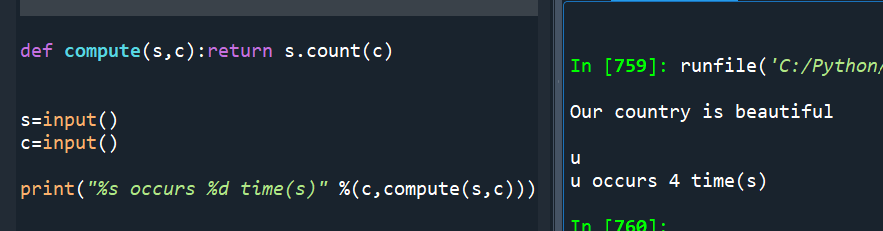
#題目希望的寫法:
def compute(s,c):return s.count(c)
s=input()
c=input()
print(“%s occurs %d time(s)” %(c,compute(s,c)))
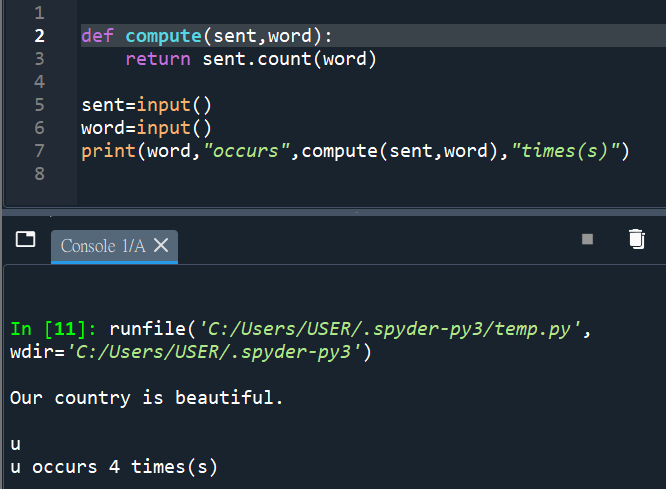
def compute(sent,word):
return sent.count(word)
sent=input()
word=input()
print(word,”occurs”,str(compute(sent,word)),”times(s)”)
#字串間用逗點分隔,自動生出空白
#用+連接,沒有空白
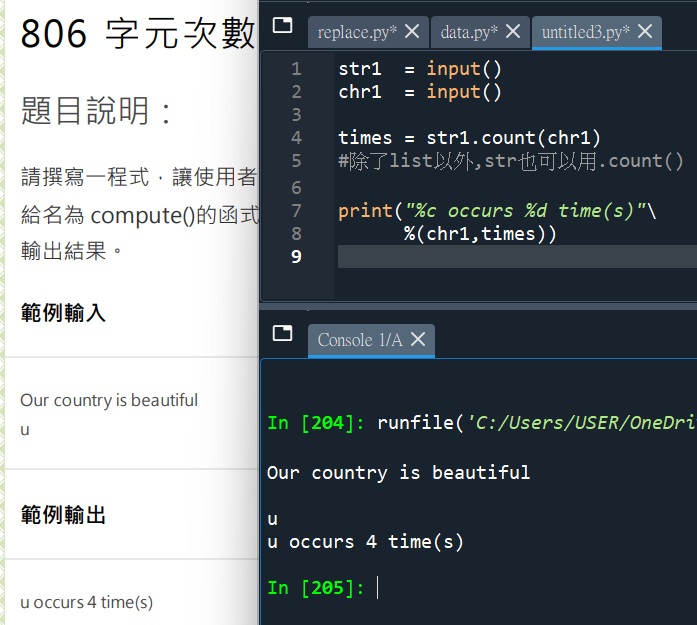
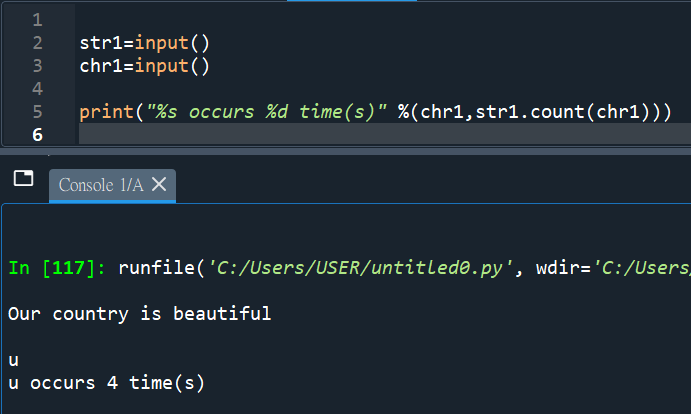
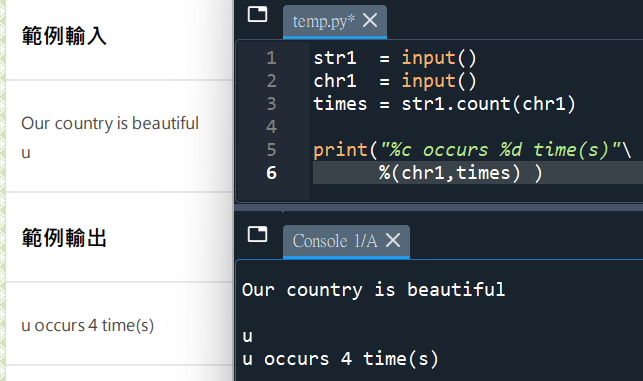
#string就可以.count()了
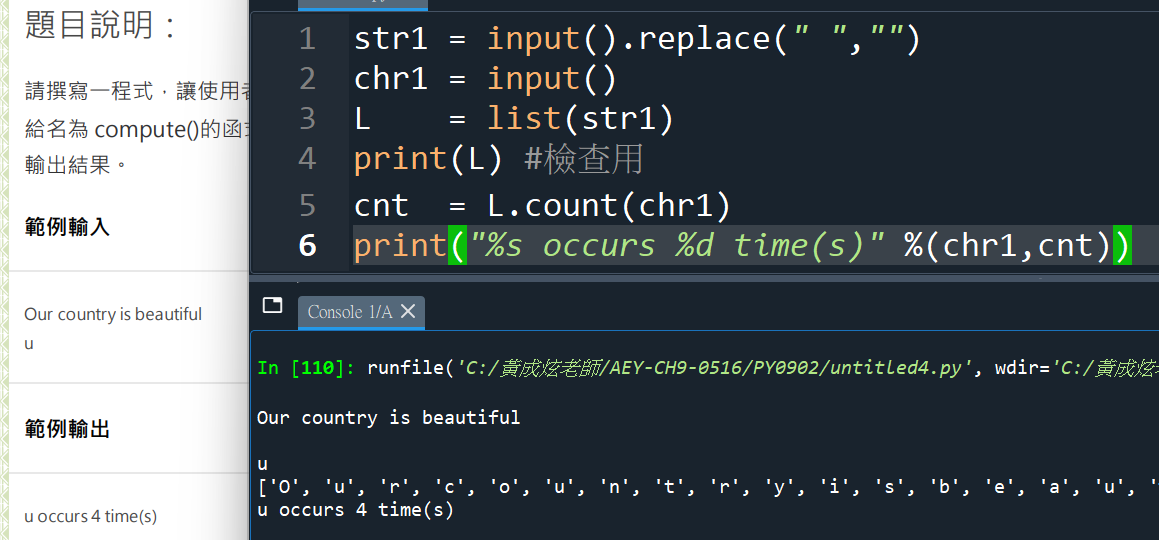
#不用轉成list,多此一舉了!


![Python陣列介紹:List[ ], Tuple( ), Set{ }, Dictionary{ }, for迴圈](https://i0.wp.com/savingking.com.tw/wp-content/uploads/2022/01/1643329597-856443d20256b1a850089a56d07657bf.png?quality=90&zoom=2&ssl=1&resize=350%2C233 "Python陣列介紹:List[ ], Tuple( ), Set{ }, Dictionary{ }, for迴圈")


![Python: 使用 flat_list.extend( List[pandas.Series] ) 實現 pandas.DataFrame 列擴展教學](https://i2.wp.com/savingking.com.tw/wp-content/uploads/2025/04/20250421141348_0_14cedf.png?quality=90&zoom=2&ssl=1&resize=350%2C233 "Python: 使用 flat_list.extend( List[pandas.Series] ) 實現 pandas.DataFrame 列擴展教學")


近期留言