


sort_values() 是 pandas 中最常用的排序方法,
它可以按指定欄位對資料進行排序。
讓我用一個簡單的例子來解釋:
基本例子:水果價格表
import pandas as pd

# 創建簡單的水果價格表
fruits_df = pd.DataFrame({
    '水果': ['蘋果', '香蕉', '橙子', '草莓', '藍莓'],
    '價格': [30, 15, 25, 80, 120],
    '庫存': [100, 200, 80, 50, 30]
})

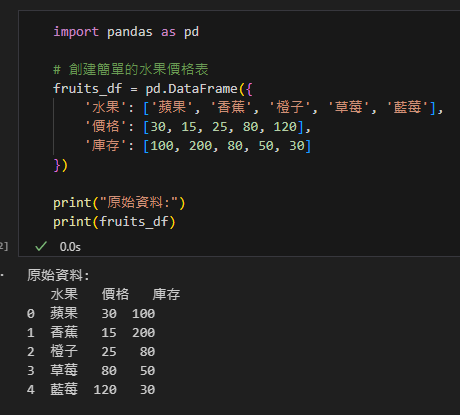
print("原始資料:")
print(fruits_df)
輸出:
單一欄位排序:
# 依據「價格」欄位排序
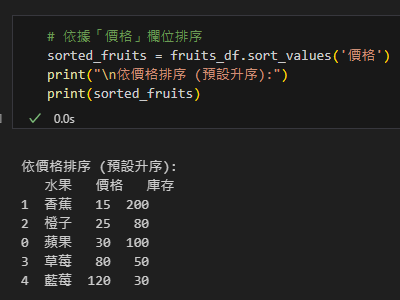
sorted_fruits = fruits_df.sort_values('價格')
print("\n依價格排序 (預設升序):")
print(sorted_fruits)
輸出:
降序排序
# 依據「價格」欄位降序排序
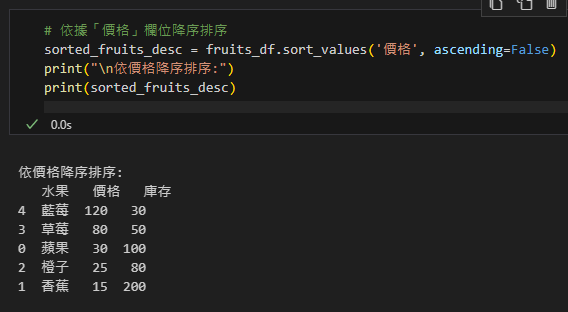
sorted_fruits_desc = fruits_df.sort_values('價格', ascending=False)
print("\n依價格降序排序:")
print(sorted_fruits_desc)
輸出:
推薦hahow線上學習python: https://igrape.net/30afN


![一文搞懂Python pandas.DataFrame去重:df.drop_duplicates() 與 df[~df.duplicated()] 的等價、差異與最佳實踐](https://i2.wp.com/savingking.com.tw/wp-content/uploads/2025/08/20250808202701_0_66f9bc.png?quality=90&zoom=2&ssl=1&resize=350%2C233 "一文搞懂Python pandas.DataFrame去重:df.drop_duplicates() 與 df[~df.duplicated()] 的等價、差異與最佳實踐")


![Python TQC考題404 數字反轉判斷,n_rev=n[::-1], list1.reverse() - 儲蓄保險王](https://savingking.com.tw/wp-content/uploads/2022/04/20220825152414_97-336x245.png)

近期留言