


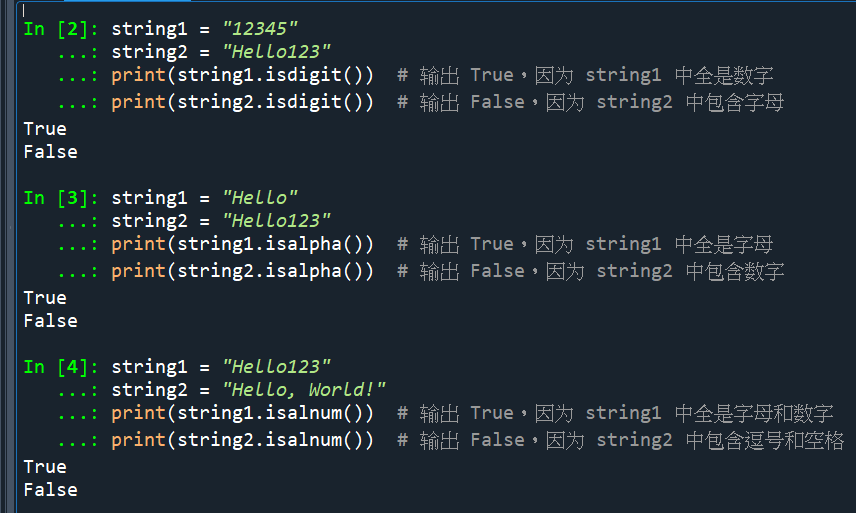
isdigit() – 判断字符串是否全是数字 [0-9]。
string1 = "12345"
string2 = "Hello123"
print(string1.isdigit())  # 输出 True,因为 string1 中全是数字
print(string2.isdigit())  # 输出 False,因为 string2 中包含字母
isalpha() – 判断字符串是否全是字母 [a-zA-Z]。
string1 = "Hello"
string2 = "Hello123"
print(string1.isalpha())  # 输出 True,因为 string1 中全是字母
print(string2.isalpha())  # 输出 False,因为 string2 中包含数字
isalnum() – 判断 字符串是否由字母或数字组成[a-zA-Z0-9]。
string1 = "Hello123"
string2 = "Hello, World!"
print(string1.isalnum())  # 输出 True,因为 string1 中全是字母和数字
print(string2.isalnum())  # 输出 False,因为 string2 中包含逗号和空格
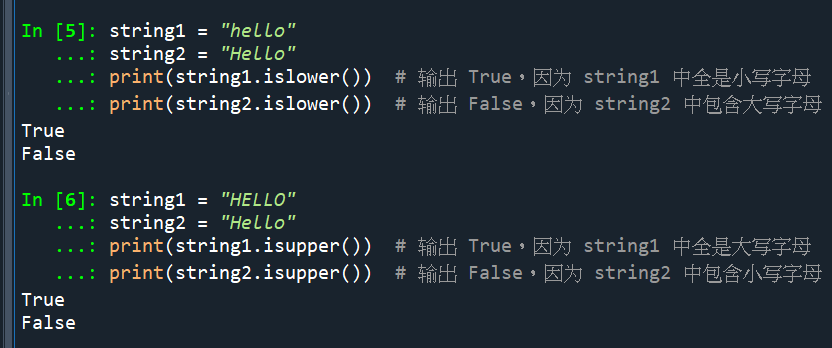
islower() – 判断 字符串是否全部为小写字母 [a-z]。
string1 = "hello"
string2 = "Hello"
print(string1.islower())  # 输出 True,因为 string1 中全是小写字母
print(string2.islower())  # 输出 False,因为 string2 中包含大写字母
isupper() – 判断字符串是否全部为大写字母 [A-Z]。
string1 = "HELLO"
string2 = "Hello"
print(string1.isupper())  # 输出 True,因为 string1 中全是大写字母
print(string2.isupper())  # 输出 False,因为 string2 中包含小写字母
輸出結果:
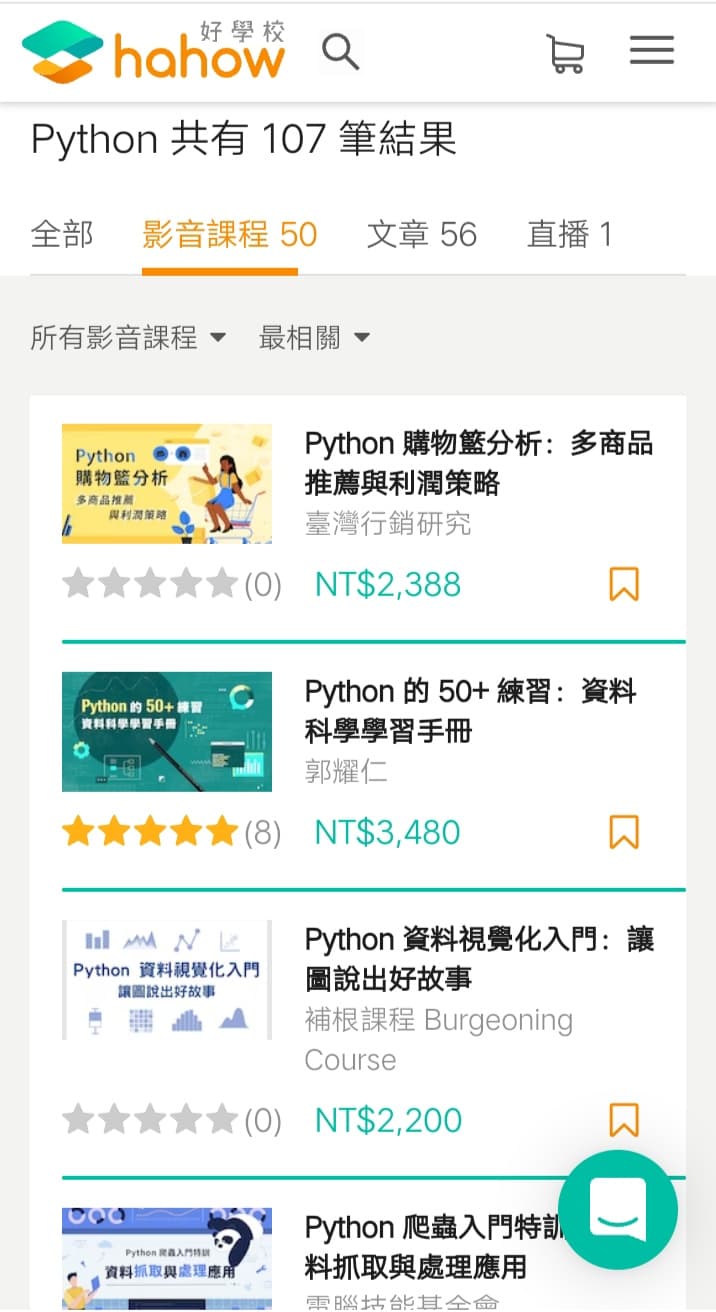
推薦hahow線上學習python: https://igrape.net/30afN

![Python TQC考題604 眾數, cnt[L.index(n)]+=1, L[cnt.index(max(cnt))], if L.count(n)>maxcnt:](https://i0.wp.com/savingking.com.tw/wp-content/uploads/2022/04/20220430181911_73.png?quality=90&zoom=2&ssl=1&resize=350%2C233 "Python TQC考題604 眾數, cnt[L.index(n)]+=1, L[cnt.index(max(cnt))], if L.count(n)>maxcnt:")


![Python陣列介紹:List[ ], Tuple( ), Set{ }, Dictionary{ }, for迴圈](https://i2.wp.com/savingking.com.tw/wp-content/uploads/2022/01/1643329597-856443d20256b1a850089a56d07657bf.png?quality=90&zoom=2&ssl=1&resize=350%2C233 "Python陣列介紹:List[ ], Tuple( ), Set{ }, Dictionary{ }, for迴圈")



近期留言