


參考: Python: pandas.DataFrame.astype函数方法的使用
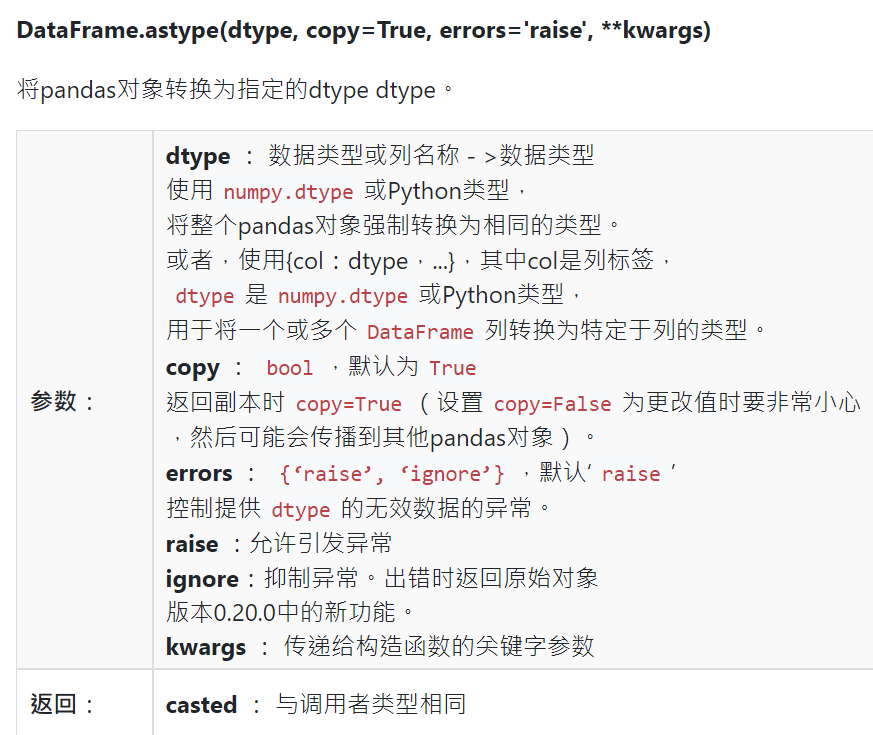
舉例:
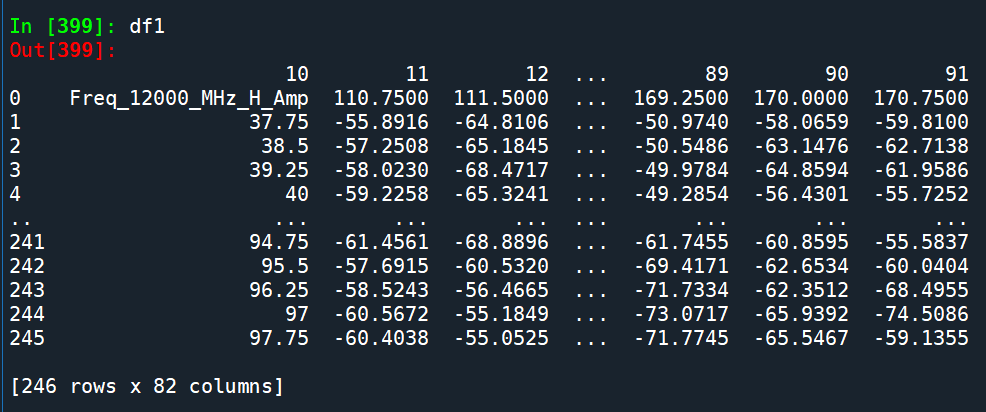
df1.astype( dtype = np.float64, errors = “ignore”)
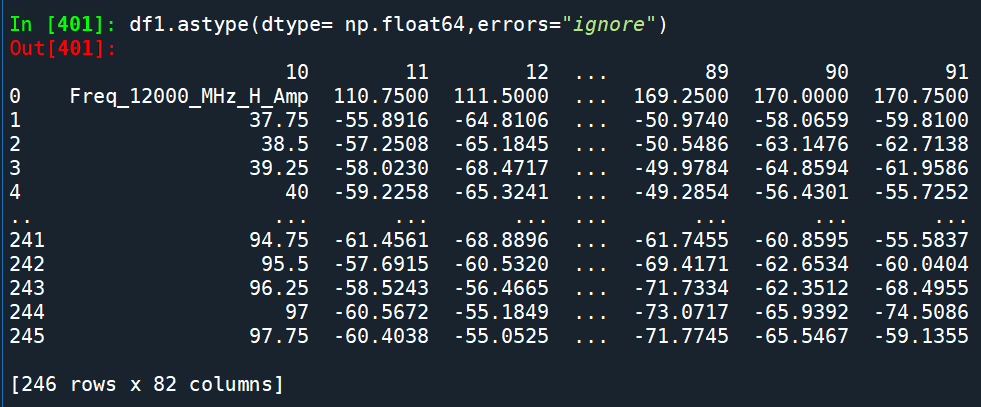
df1.astype(dtype= np.float64)
#沒有設定errors參數,預設值為”raise”
ValueError: could not convert string to float: ‘Freq_12000_MHz_H_Amp’
則只能對1D 的資料做處理
若對 DataFrame處理
會出現
TypeError: arg must be a list, tuple, 1-d array, or Series
numpy.ndarray的astype() :
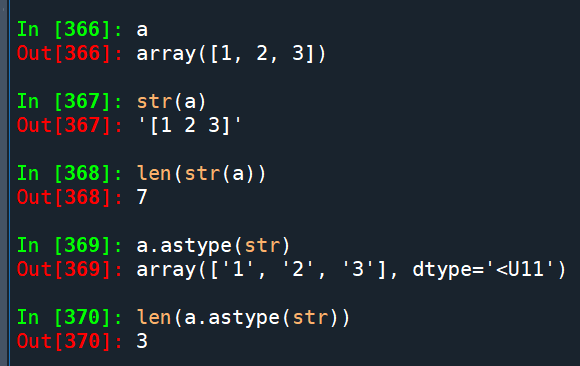
容易誤會 str(a)能將
array所有元素轉為字串
需使用 a.astype(str)
a.astype(object) 也可
a.astype(np.object)雖然可以跑
但會出現np.object已經廢棄的警告訊息
建議單獨使用object即可
推薦hahow線上學習python: https://igrape.net/30afN


![Python-docx 圖片提取完全指南:從 rId 到二進位資料的探險rid ; part = doc.part.rels[rid].target_part #return part.blob if “ImagePart” in type(part).__name__ else None](https://i2.wp.com/savingking.com.tw/wp-content/uploads/2026/01/20260113135812_0_8fa645.png?quality=90&zoom=2&ssl=1&resize=350%2C233 "Python-docx 圖片提取完全指南:從 rId 到二進位資料的探險rid ; part = doc.part.rels[rid].target_part #return part.blob if “ImagePart” in type(part).__name__ else None")


![Python: pandas.DataFrame串接; pandas.concat( [df1,df2] , axis=1, ignore_index=True) ; .append() 產生一個新的DataFrame; 插入欄 .insert() 改變原DataFrame](https://i2.wp.com/savingking.com.tw/wp-content/uploads/2022/11/20221129145451_29.png?quality=90&zoom=2&ssl=1&resize=350%2C233 "Python: pandas.DataFrame串接; pandas.concat( [df1,df2] , axis=1, ignore_index=True) ; .append() 產生一個新的DataFrame; 插入欄 .insert() 改變原DataFrame")



近期留言