


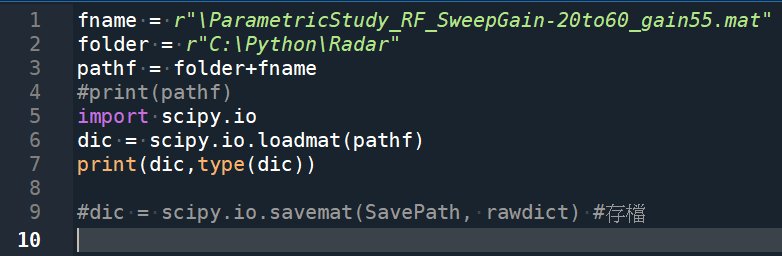
fname = r”\ParametricStudy_RF_SweepGain-20to60_gain55.mat”
folder = r”C:\Python\Radar”
pathf = folder+fname
#print(pathf)
import scipy.io
dic = scipy.io.loadmat(pathf)
print(dic,type(dic))
# scipy.io.savemat(SavePath, rawdict) #存檔
#SavePath = 路徑+檔名+ .mat
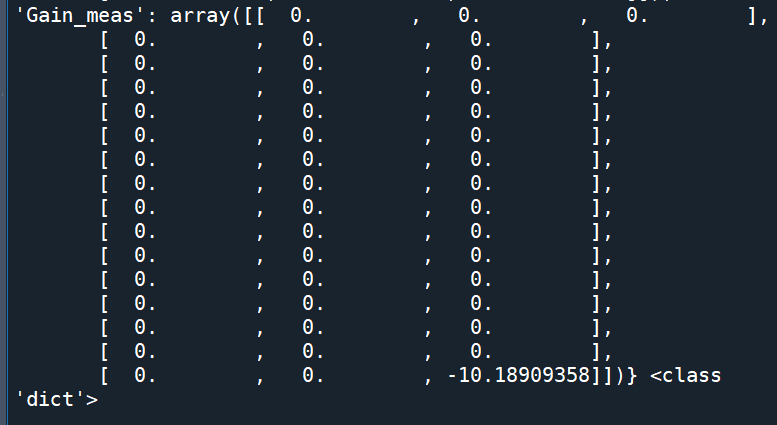
部分輸出結果:

![Python: pandas.DataFrame串接; pandas.concat( [df1,df2] , axis=1, ignore_index=True) ; .append() 產生一個新的DataFrame; 插入欄 .insert() 改變原DataFrame](https://i1.wp.com/savingking.com.tw/wp-content/uploads/2022/11/20221129145451_29.png?quality=90&zoom=2&ssl=1&resize=350%2C233 "Python: pandas.DataFrame串接; pandas.concat( [df1,df2] , axis=1, ignore_index=True) ; .append() 產生一個新的DataFrame; 插入欄 .insert() 改變原DataFrame")

![Python如何讀寫csv逗點分隔檔(每列內容為新光增有利現金流)?pandas.read_csv(r”路徑\檔名.副檔名”),如何移除list中的nan元素?math.isnan(),如何計算新光增有利IRR?numpy_financial(array) ;輸出csv檔時如何去掉index跟header?如何選擇要寫入的直欄columns? dfFinal.to_csv(fpath, index=False, header=None, columns=[0,1])](https://i2.wp.com/savingking.com.tw/wp-content/uploads/2022/11/20221110122900_3.png?quality=90&zoom=2&ssl=1&resize=350%2C233 "Python如何讀寫csv逗點分隔檔(每列內容為新光增有利現金流)?pandas.read_csv(r”路徑\檔名.副檔名”),如何移除list中的nan元素?math.isnan(),如何計算新光增有利IRR?numpy_financial(array) ;輸出csv檔時如何去掉index跟header?如何選擇要寫入的直欄columns? dfFinal.to_csv(fpath, index=False, header=None, columns=[0,1])")


近期留言