


#Python TQC考題909
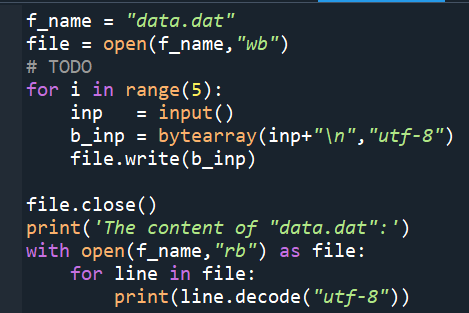
f_name = “data.dat”
file = open(f_name,”wb”)
# TODO
for i in range(5):
inp = input()
b_inp = bytearray(inp+”\n”,”utf-8″)
file.write(b_inp)
file.close()
print(‘The content of “data.dat”:’)
with open(f_name,”rb”) as file:
for line in file:
print(line.decode(“utf-8”))
“””
The content of “data.dat”:
“””
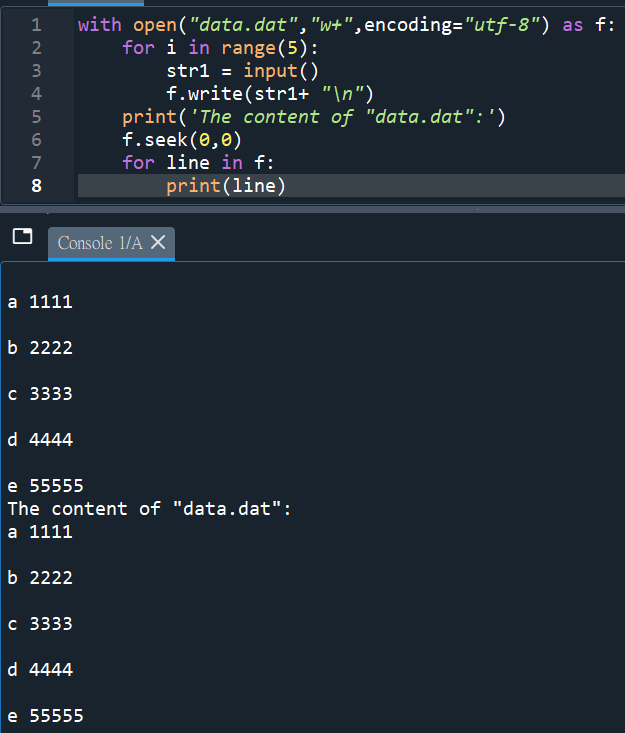
#只要加encoding=”utf-8″
#b模式都用不到,如: rb, wb
![Python: 如何創建多層column name的pandas.DataFrame? df = pd.read_csv (‘data.csv’, header=[0, 1], sep=”,”) ; col = pd .MultiIndex .from_arrays( aryCol )](https://i1.wp.com/savingking.com.tw/wp-content/uploads/2023/03/20230314164119_32.png?quality=90&zoom=2&ssl=1&resize=350%2C233 "Python: 如何創建多層column name的pandas.DataFrame? df = pd.read_csv (‘data.csv’, header=[0, 1], sep=”,”) ; col = pd .MultiIndex .from_arrays( aryCol )")


![Python: pandas.DataFrame 如何找出重複值並計算重複次數? counts = df[duplicates] .groupby([‘name’]) .size() .reset_index(name=’count’)](https://i1.wp.com/savingking.com.tw/wp-content/uploads/2023/03/20230316131103_65.png?quality=90&zoom=2&ssl=1&resize=350%2C233 "Python: pandas.DataFrame 如何找出重複值並計算重複次數? counts = df[duplicates] .groupby([‘name’]) .size() .reset_index(name=’count’)")

![Python Logging 完全指南:從基礎到實戰應用; import logging ; logging.basicConfig(level=logging.INFO, handlers=[ logging.StreamHandler(), logging.FileHandler(‘app.log’, mode=’a’, encoding=’utf-8′)] ) ; inspect.currentframe().f_code.co_name #動態取得funcName](https://i0.wp.com/savingking.com.tw/wp-content/uploads/2025/10/20251021155823_0_c16012.png?quality=90&zoom=2&ssl=1&resize=350%2C233 "Python Logging 完全指南:從基礎到實戰應用; import logging ; logging.basicConfig(level=logging.INFO, handlers=[ logging.StreamHandler(), logging.FileHandler(‘app.log’, mode=’a’, encoding=’utf-8′)] ) ; inspect.currentframe().f_code.co_name #動態取得funcName")



近期留言