


code:
import json
import os

dirname = r"D:\json"
basename = "test_json_comment.json"
fpath = os.path.join(dirname, basename)

with open( fpath , encoding="UTF-8" ) as json_file:
    dic = json.load(json_file)
    json_file.seek(0,0)
    strr = json_file.read()
    print("strr:",strr)
    dic1 = json.loads(strr)

print("\ndic:",dic)
print("\ndic1",dic1)
輸出結果:
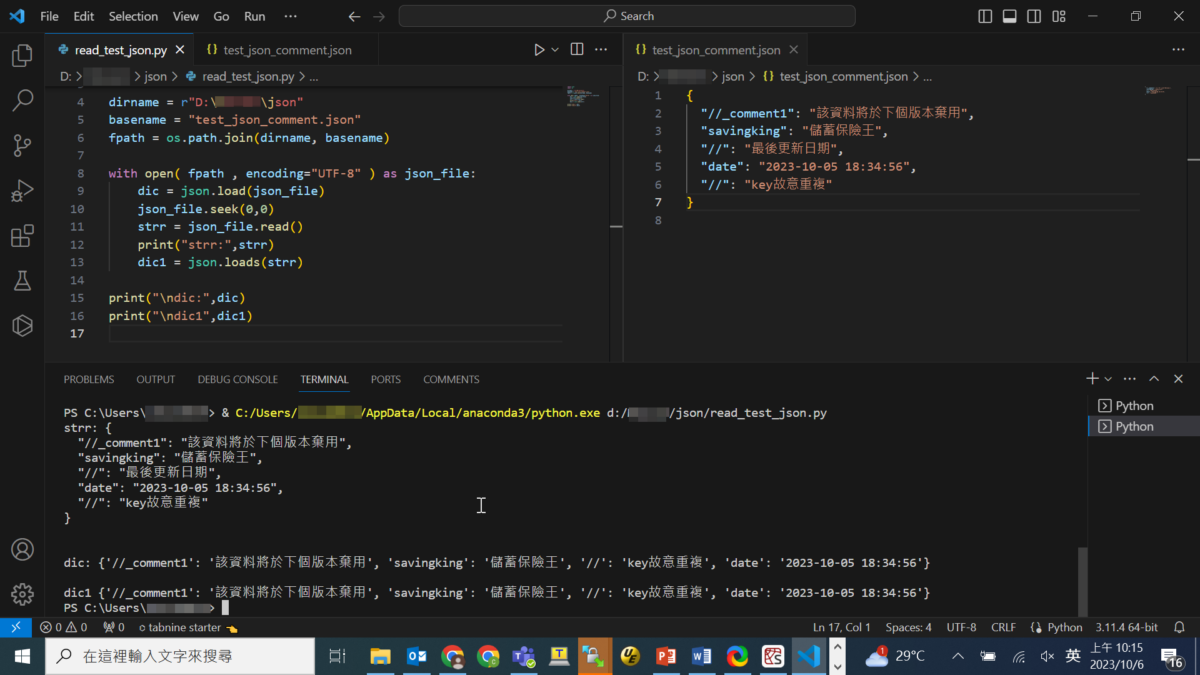
json.load 方法用於從文件中讀取並解析JSON數據,然後將其轉換為Python數據結構(字典、列表等)。在代碼中,已經使用了 json.load 來加載數據,並將其存儲在了 dic 變量中,因此不需要再次使用 json_file.read() 來讀取JSON文件的內容。
一旦使用 json.load 方法讀取了JSON文件的內容,文件指針就會在文件的末尾,若沒有json_file.seek(0,0)跳回文件的一開頭,再次調用 json_file.read() 將返回空字符串,因為已經到達了文件的末尾。
json.load(json_file) 跟
json.loads(strr)
參數的型別不一樣:
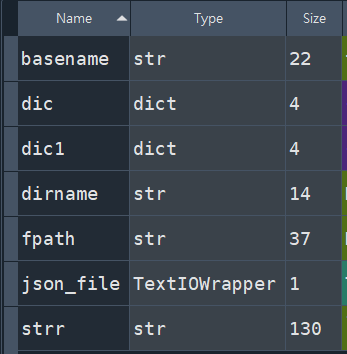
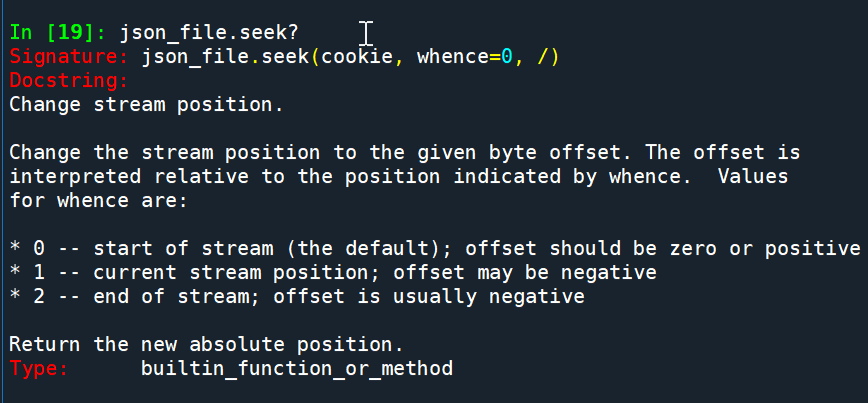
json_file.seek(0,0)
#第一個0表示文件之開頭
#第二個0表示偏移0
推薦hahow線上學習python: https://igrape.net/30afN
![Python: 字串 str.find(關鍵字[,start][,end]),找不到的話回傳-1,如何找出資料字串中,所有關鍵字的index?詞頻計算](https://i2.wp.com/savingking.com.tw/wp-content/uploads/2022/11/20221122100657_32.png?quality=90&zoom=2&ssl=1&resize=350%2C233 "Python: 字串 str.find(關鍵字[,start][,end]),找不到的話回傳-1,如何找出資料字串中,所有關鍵字的index?詞頻計算")


![Excel TQC考題202: 快樂小學學生名冊,自訂格式:0″公斤”;[紅色]”減”0″公斤”;[藍色]”完美身材”](https://i1.wp.com/savingking.com.tw/wp-content/uploads/2022/04/20220410142405_70.png?quality=90&zoom=2&ssl=1&resize=350%2C233 "Excel TQC考題202: 快樂小學學生名冊,自訂格式:0″公斤”;[紅色]”減”0″公斤”;[藍色]”完美身材”")

![Python: 自定義函數計算計程車車資(先typing,再用預設值), 巢狀字典以及typing.Union[ ], assert 斷言](https://i2.wp.com/savingking.com.tw/wp-content/uploads/2022/09/20220923222039_57.png?quality=90&zoom=2&ssl=1&resize=350%2C233 "Python: 自定義函數計算計程車車資(先typing,再用預設值), 巢狀字典以及typing.Union[ ], assert 斷言")


近期留言