


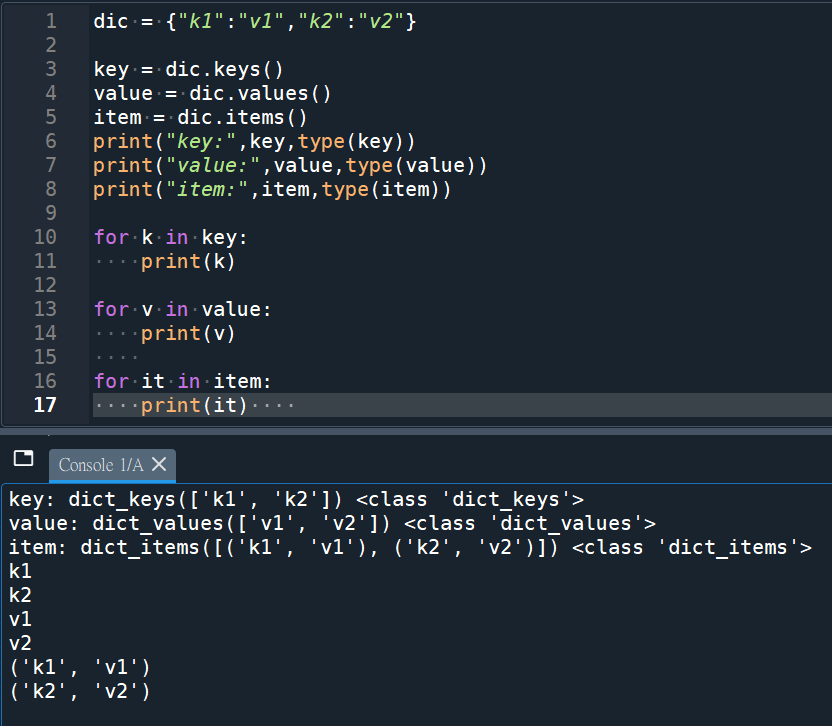
dic = {“k1″:”v1″,”k2″:”v2”}
key = dic.keys()
“””
#像list(有序),但無法使用key[0]
#TypeError: ‘dict_keys’ object is not subscriptable(可下標的)
可使用keyLst = [k for k in key],轉為真正的list
#set(dic)也可取出所有key, type為set (無序)
“””
value = dic.values()
item = dic.items()
print(“key:”,key,type(key))
print(“value:”,value,type(value))
print(“item:”,item,type(item))
for k in key:
print(k)
for v in value:
print(v)
for it in item:
print(it)
type(dicIn.keys):
builtin_function_or_method
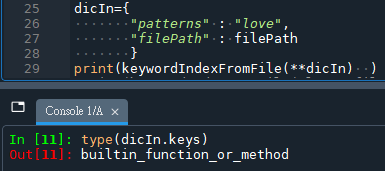
.keys()是一個函式或方法
回傳一個list-like的資料
所以後面需要()
推薦hahow線上學習python: https://igrape.net/30afN


![Python提取2D array的一部份資料; import numpy; a[1: , 2:] ; a[1:-1 , 2:-1] - 儲蓄保險王](https://savingking.com.tw/wp-content/uploads/2022/09/20220906122441_97-520x245.png)
近期留言