

import matplotlib.pyplot as plt
fig, ax = plt.subplots()
ax.plot([1, 2, 3], [1, 2, 3], label='Line 1')
ax.plot([1, 2, 3], [3, 2, 1], label='Line 2')
ax.legend()
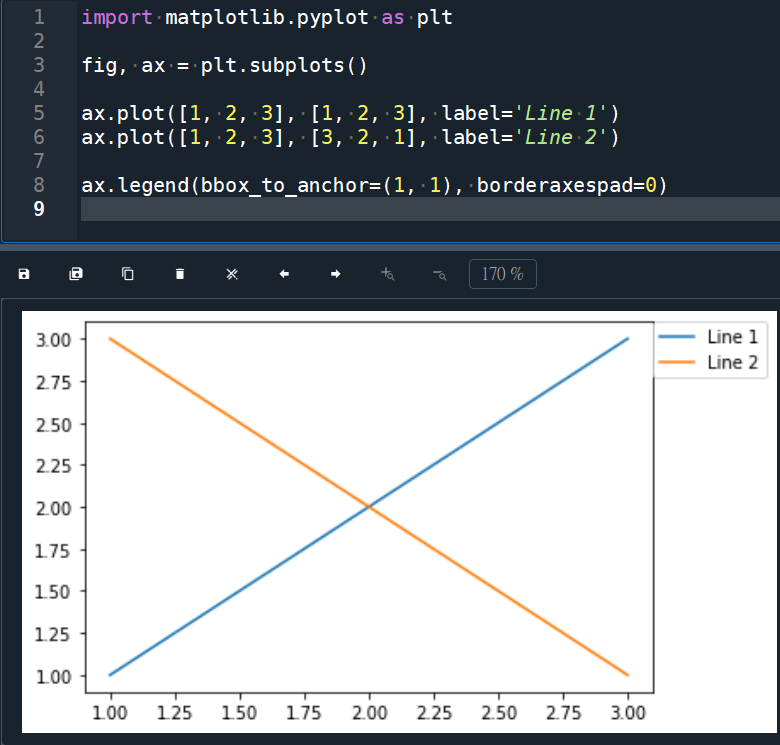
#bbox_to_anchor=(1, 1), borderaxespad=0
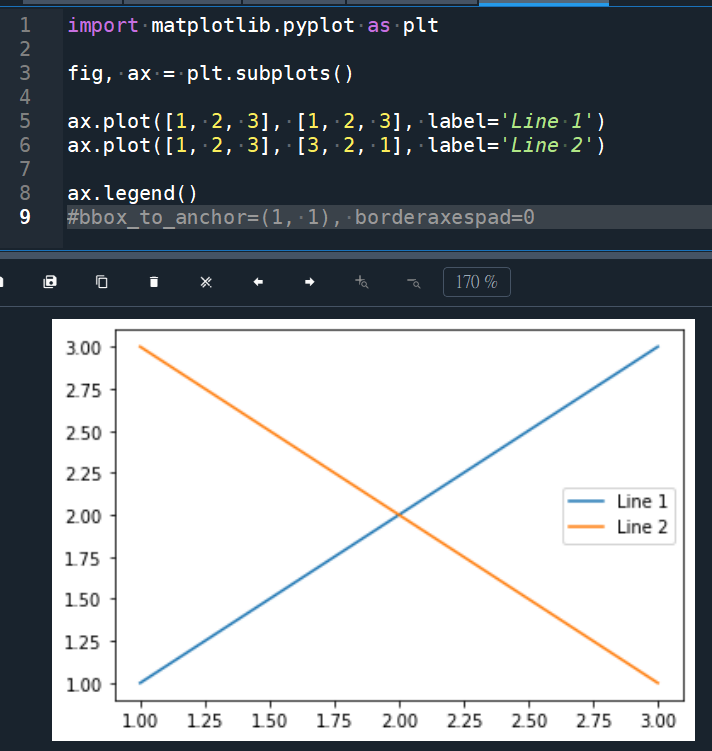
這會生成一個包含兩條線條的圖表,並且圖例會被放在預設的位置。
現在,我們想要把圖例放在右上角,可以使用 bbox_to_anchor 參數。
首先,我們需要先了解該參數的使用方式。
bbox_to_anchor 參數需要傳入一個二元組 (x, y),表示圖例的錨點位置。
這個位置是相對於繪圖區域而言的,通常 (0, 0) 代表繪圖區域的左下角,
而 (1, 1) 則代表繪圖區域的右上角。
因此,如果我們要把圖例放在右上角,
可以將 bbox_to_anchor 參數設為 (1, 1),
表示圖例的錨點位置就在繪圖區域的右上角。
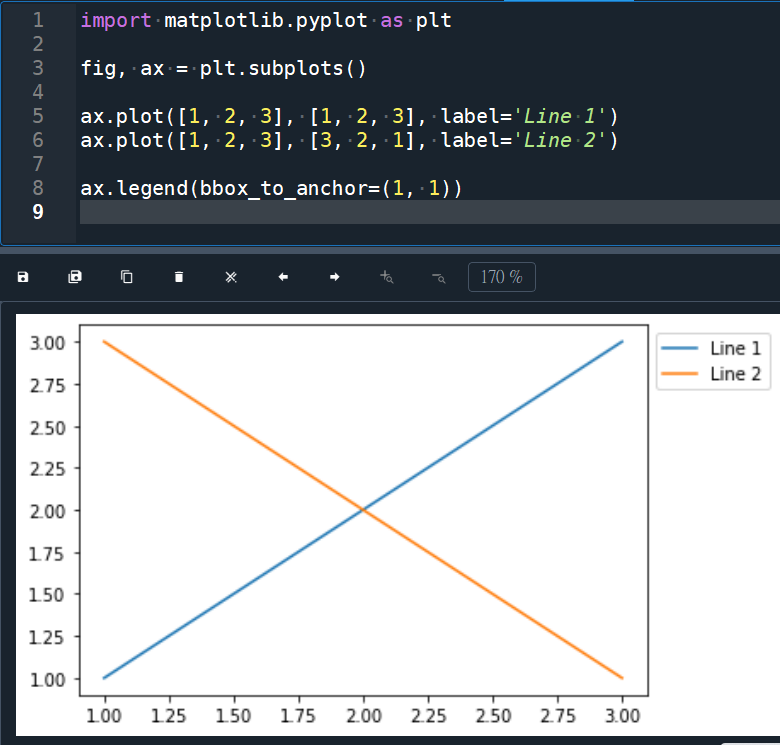
bbox_to_anchor=(0, 0):
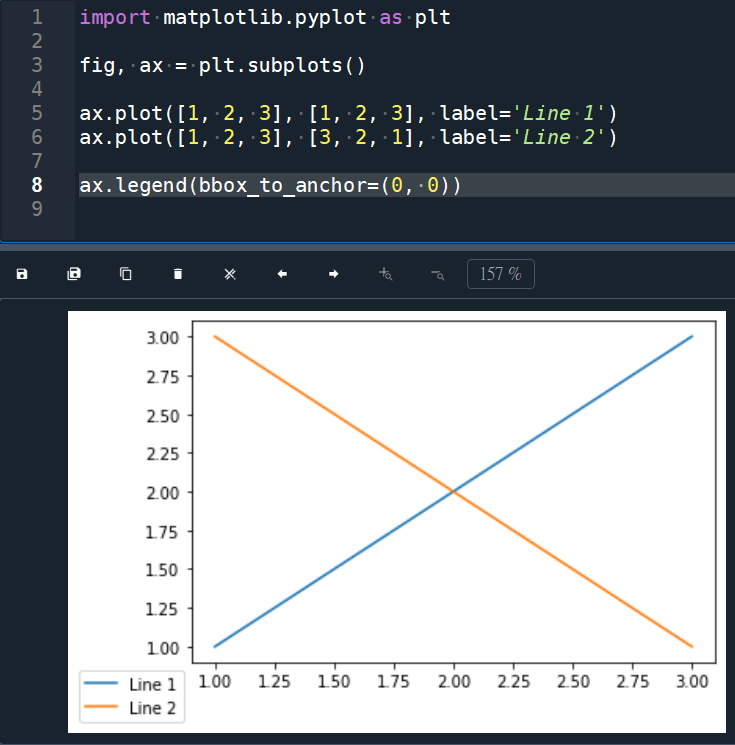
圖例和繪圖區域之間有一段距離,這是因為 Matplotlib 預設會給圖例留出一定的空間。如果我們不想要這段空間,可以再加上 borderaxespad 參數來指定空間的大小。
bbox 的英文原意是 “bounding box”,指的是一个包围某个对象的矩形框,
通常由左下角和右上角的坐标来确定。
在 Matplotlib 中,bbox 经常用于确定图形元素的位置和大小,
例如 legend 的位置可以通过设置 bbox 的左上角坐标和宽高来实现。
border axes pad
border: (legend的)邊界
pad: 軟墊
“pad” 的意思是 “填充” 或 “襯墊”。”border” 通常指周围的边框,”axes” 则指轴的范围。因此,”border axes pad” 的意思是轴范围与图例边界之间的填充量,即图例内部内容与周围边框之间的间隔距离。这个参数可以用来控制图例的位置和大小,使其与轴范围的位置和大小相匹配,同时保持一定的间隔。
推薦hahow線上學習python: https://igrape.net/30afN


![Python如何做excel的樞紐分析? groupbyObj = df.groupby([‘A’, ‘B’]) ; groupbyObj.apply() 跟 groupbyObj.agg() 差異為何? result = groupbyObj .apply( function(df) -> Series ) ; result_agg = groupbyObj .agg( [‘mean’, ‘std’] ) ; aggfunc(Series) -> float Python如何做excel的樞紐分析? groupbyObj = df.groupby([‘A’, ‘B’]) ; groupbyObj.apply() 跟 groupbyObj.agg() 差異為何? result = groupbyObj .apply( function(df) -> Series ) ; result_agg = groupbyObj .agg( [‘mean’, ‘std’] ) ; aggfunc(Series) -> float](https://i2.wp.com/savingking.com.tw/wp-content/uploads/2023/03/20230327140158_46.png?quality=90&zoom=2&ssl=1&resize=350%2C233)


![Python: 如何使用functools.reduce逐步縮減可迭代對象,合併為單個結果? import functools; product = functools.reduce( lambda x, y: x * y, numbers) ; reduce(function, sequence [, initial]) -> value ; map(function, iterable) ; filter(function, iterable) ; map ; filter Python: 如何使用functools.reduce逐步縮減可迭代對象,合併為單個結果? import functools; product = functools.reduce( lambda x, y: x * y, numbers) ; reduce(function, sequence [, initial]) -> value ; map(function, iterable) ; filter(function, iterable) ; map ; filter](https://i0.wp.com/savingking.com.tw/wp-content/uploads/2023/06/20230626093403_49.png?quality=90&zoom=2&ssl=1&resize=350%2C233)
![Python: pandas.Series如何只保留str,去除重複值?#isinstance(x:Any, str) -> bool #.drop_duplicates() #Series.apply( function )逐元素應用function運算 #DataFrame.apply( function )逐Series應用function運算 .drop_duplicates() 跟.unique()有何差別? df.drop_duplicates() 等效於 df[~df.duplicated()] Python: pandas.Series如何只保留str,去除重複值?#isinstance(x:Any, str) -> bool #.drop_duplicates() #Series.apply( function )逐元素應用function運算 #DataFrame.apply( function )逐Series應用function運算 .drop_duplicates() 跟.unique()有何差別? df.drop_duplicates() 等效於 df[~df.duplicated()]](https://i2.wp.com/savingking.com.tw/wp-content/uploads/2024/11/20241123194900_0_5218de.png?quality=90&zoom=2&ssl=1&resize=350%2C233)

![Python 如何做excel的樞紐分析? pandas.DataFrame.groupby() ; .agg( {column name: function name} ) ; 如何讀取多層index的xlsx檔案? df = pandas.read_excel (fpath, index_col =[0,1]) ; 如何顯示所有欄? pd.set_option ( “display.max_columns”, None) Python 如何做excel的樞紐分析? pandas.DataFrame.groupby() ; .agg( {column name: function name} ) ; 如何讀取多層index的xlsx檔案? df = pandas.read_excel (fpath, index_col =[0,1]) ; 如何顯示所有欄? pd.set_option ( “display.max_columns”, None)](https://i0.wp.com/savingking.com.tw/wp-content/uploads/2023/03/20230321113121_64.png?quality=90&zoom=2&ssl=1&resize=350%2C233)

近期留言