


mmw Demo Data Structure v0.1:
#ADCsamples is set in the profileCfg line of the cfg file ;
#RangeBins = number of ADC samples rounded up(向上取整) to the nearest power of 2
profile.cfg : profileCfg 0 77 372 7 114.29 0 0 35 1 240 2257 0 0 30 ;
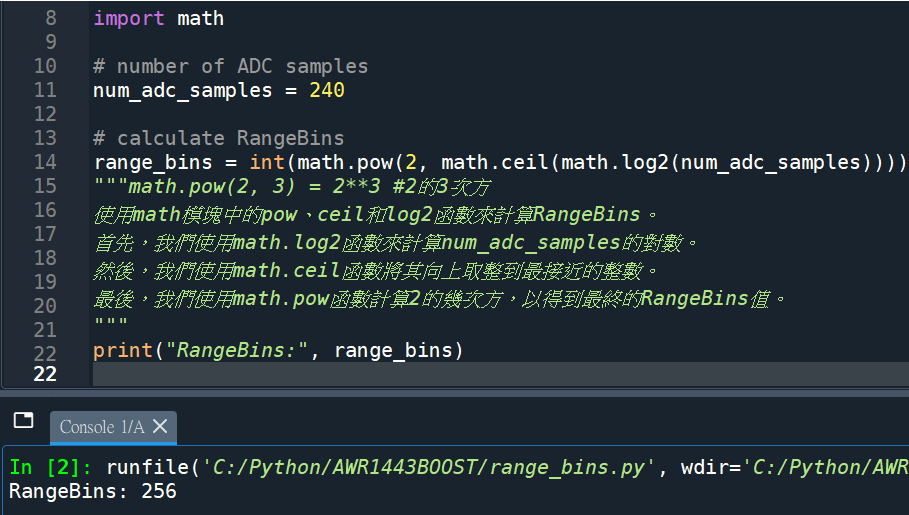
import math
# number of ADC samples
num_adc_samples = 240
# calculate RangeBins
range_bins = int(math.pow(2, math.ceil(math.log2(num_adc_samples))))
"""math.pow(2, 3) = 2**3 #2的3次方
2** math.ceil(math.log2(num_adc_samples))
#這樣也可以 #2**8=256
使用math模塊中的pow、ceil和log2函數來計算RangeBins。
首先,我們使用math.log2函數來計算num_adc_samples的對數。
然後,我們使用math.ceil函數將其向上取整到最接近的整數。
最後,我們使用math.pow函數計算2的幾次方,以得到最終的RangeBins值。
"""
print("RangeBins:", range_bins)
推薦hahow線上學習python: https://igrape.net/30afN


![Python如何寫入docx文件? from docx import Document ; doc = Document() ; table = doc.add_table(rows=5, cols=3) ; table.cell(r,c).text = str(tabs[r][c]) ; doc.add_heading ; p = doc.add_paragraph ; p.add_run ; doc.add_picture ; 使用wordPad開啟會少最後一個row,可以用免費的LibreOffice](https://i1.wp.com/savingking.com.tw/wp-content/uploads/2022/09/20220914154313_30.jpg?quality=90&zoom=2&ssl=1&resize=350%2C233 "Python如何寫入docx文件? from docx import Document ; doc = Document() ; table = doc.add_table(rows=5, cols=3) ; table.cell(r,c).text = str(tabs[r][c]) ; doc.add_heading ; p = doc.add_paragraph ; p.add_run ; doc.add_picture ; 使用wordPad開啟會少最後一個row,可以用免費的LibreOffice")




近期留言